Month: October 2016
The American Road Trip • Part IV
Labor day brings burgers and corn on the grill. Kids straining for school’s resumption. Perhaps commencement of well-laid vacation plans. A favorable time of year. Crowds are subdued, winter beckons, leaves begin to change.
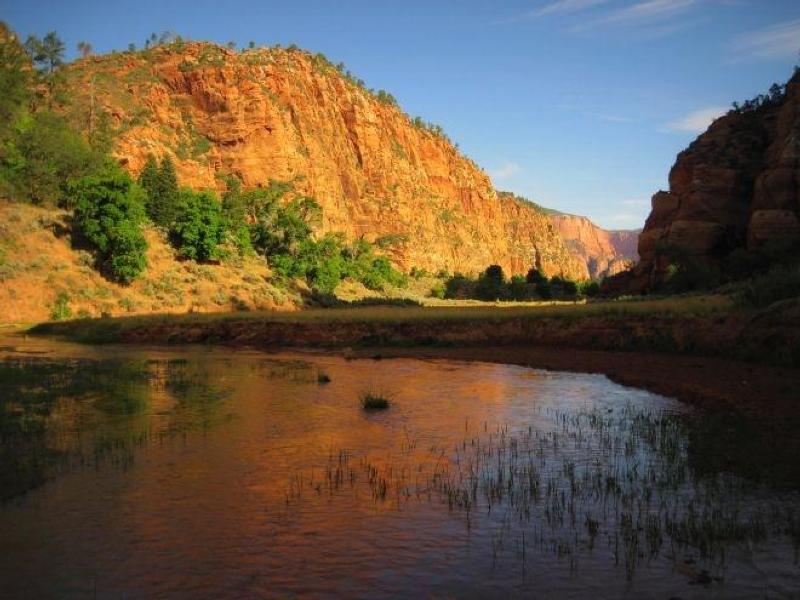 If piloting a 30′ box mounted on Ford’s E-450 chassis along narrow State highways does not sound vacationary, careful what you promise. Years after your words are spoken you’ll be parking in spaces meant for vehicles a third shorter, braving hand-dug tunnels driving a vehicle twice your height, squeezing past oncoming traffic through scenic rocky gorges. Expecting the RV to peel open upon an outcropping at any moment.
It was not that bad. A flat $1,000 deductible on full-coverage insurance, included with every rental, eases my mind. Fuel economy was predictably in high single digits. The toilet worked. Our RV experience was a success.
7am, the perfect start time for our trek towards the Colorado Plateau. Driving from Phoenix allows one to detour through Sedona, famous for its red rocks – the Schnebly Hill Formation – valleys, and shopping. Continuing north along US-89 to Flagstaff, a super-hip college and observatory town close to the Grand Canyon. Through pine, Douglas fir, and spruce. We rejuvenate souls and lungs.
From Williams AZ the North Rim is visible twenty miles away. A couple of days in Grand Canyon, famous for exceptional dining at El Tovar, more shopping, unparalleled views. Back on the road to desert, rock, and scenery. The mellow peace of driving your home ensues. Kanab, then Zion. Zion National Park, of the narrow tunnels and inspirational rock formations. RV parking and an excellent shuttle system.
We visit Cedar Breaks National Monument. “Great choice”, a Zion ranger insists. More beautiful driving, Duck Lake surrounded by aspen, more canyons. It was in the 50˚s at this elevation near sundown. Windburned, sunburned, layered in nearly all the clothes I brought, our road trip approaches conclusion. From the furthest point we turn and head for home.
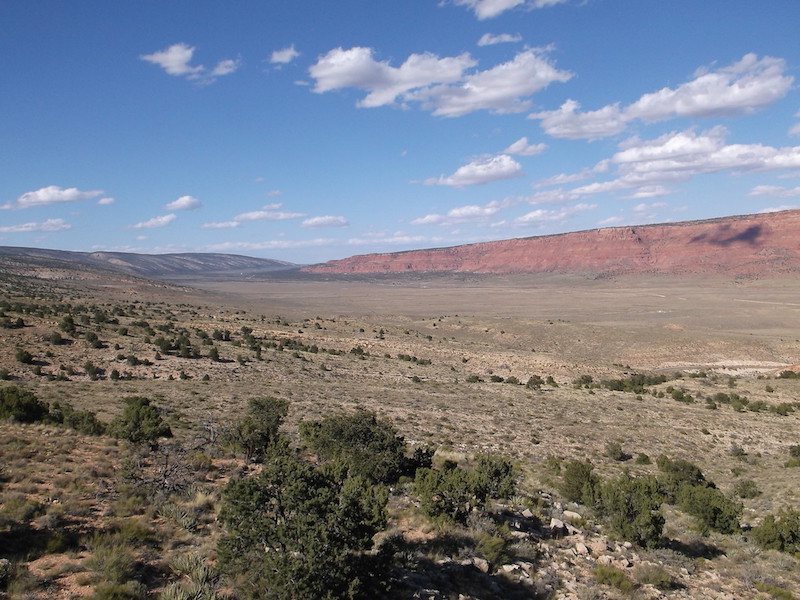 Through Iron County along SR-14 we come upon dense aspen with bright yellow leaves, autumn reaching this forest a little early. Onward to an excellent Comfort Suites in Cedar City UT. Tap water cleaner than the bottled water stowed on the RV. South to my favorite spot, Kolob Canyons, Zion’s western edge. Back through Zion, and a day of pleasant driving along US-89 Alternate. The San Francisco Peaks appear closer for over an hour as we approach Flagstaff.
A few miles west, along Rt-66, the second highlight of my trip (after the aspens). The Arboretum At Flagstaff. Parked beneath towering ponderosa pine, my cousins take to their trails. I put on the kettle, set up a camp chair, and relax under the morning silence and majesty of this forest. After 1,200 miles in six days, everything stops. I could live here forever, with trips into town for books, beans, and beer.
In the end, it is all about people. Vacationing with friends. Sammy, an Allentown transplant keeping a B&B running in Williams AZ. That colorful beef jerky guy beside the highway miles from any town. Professional waitstaff within a dozen restaurants and cafes. Fellow tourists. Artists selling their wares, sharing their dreams. We all wanted the same thing. Everyone got it.
Although I packed my lucky tee shirt and grass-stained mitt, looking for the perfect small town diamond, this trip did not see any baseball. Jerry and Fred must have been grabbing one last game in the next town over. Before the dinner bell rings.


L.S. Starrett Company
 L. S. Starrett Company is an American manufacturer of tools and instruments used by machinists and tool and die makers. The company was founded when businessman and inventor Laroy Sunderland Starrett bought the Athol Machine Company in 1905. –wiki
Wait, what about luthiers? Machinists, tool and die makers, and luthiers, they mean to say. This particular Starrett tool is the only one I found of domestic manufacture which has end graduations in metric. Metric, because that is the language of violin luthiers when expressing measurements.
Where the C635E-150 is exceptionally helpful is in measuring violin bridge height above an imaginary line projected from the fingerboard – the projected height. Especially important, I can measure projected height while the instrument strings are under tension, and pencil corrections directly onto its bridge.
 Equally useful, when shaping a bridge from scratch, I can get a fairly accurate idea of how much material to remove before initial fitting.
Previous to this tool, I first set up each violin and measured string height at the fingerboard end. The bridge was then removed, carved or filed lower, new string slots cut, reinstalled, and re-tensioned with strings. Whew! A lotta work! Measure again and likely repeat!
With this Starrett ruler, I can quickly do more accurate setups, and get the strings right where Steve wants them. And he likes them low when he goes ripping into Floppy Eared Mule on Stinger, his favorite fiddle!


Money is always tight running this USA-products online resource. Yes, this is an appeal for you to hit the SPONSORSHIP button and zip us a few bucks. There are also other ways to help. After a few years of amateur luthier work, it became apparent this Starrett ruler would be handy. While inquiring upon Starrett manufacturing locations (my C635E was made in Athol Massachusetts) and methods ∆, a Starrett representative offered to donate this ruler “to the cause”, without promise of review or compensation on our part. It has helped our luthier work (100% of the proceeds are used to support the blog). It’s also a fantastic product and has made a worthy article. Six Thumbs Up!
∆ Markings on the steel rules are produced through photo engraving. As a last step in the manufacturing process, there is a light-sensitive coating placed on the rules. A mask is applied to protect the surface that should not be marked. Light exposure removes the coating where the markings should appear. Then they go through an acid etching process. One of our long-term employees believes that we took country of origin off the design, because the photo-engraving process is the highest risk for imperfections in the manufacturing process, so limiting the markings should help minimize scrap. – Starrett
Collings MT2 O Mandolin
 Among the dozens of fine mandolins waiting patiently in Jeff Looker’s acoustic instrument emporium hang a couple of the most beautiful specimens one can imagine. With perfect, almost luminescent ivory-like finish across the top and sumptuous walnut-stained flame maple back and sides, two Collings mandolins captivate the eye – and ear. One an f-hole model, the other an oval hole. Amazing Jeff would have one of each!
Usually I introduce my punchy bluegrass style to the f-hole variant. But with its rare one-piece back, the oval hole model beckons. Designed for celtic, old-time, classical, and jazz styles, I none-the-less rip into bluegrass and fiddle runs. The oval hole top brings out a new complexity, a surprising openness of depth, sustain, and overtone. More expressive? Probably, but I’m no expert. Regardless, I am a convert, and can imagine playing this Collings in the bluegrass circle, where plenty of fiddle and folk tunes cross over into the celtic realm.
Instruments get better with age. So can manufacturers. Hugh Mason’s 2003 MT2 sounds and plays a certain way. The latest offerings from Collings? At times I’ve got to admit, even better!


Weber Charcoal Grill
One does not imagine a marine buoy manufacturer as far inland as  Illinois (geographically challenged people like myself specifically). But that is where it all started. A Chicago guy with an idea. George Stephen Sr. was working at Weber Brothers Metal Works in Illinois. The lightbulb went off. In complete secrecy he filched a buoy from the scratch’n’dent pile, cut it in half, and made a barbecue grill out of it. The dynasty of American-made quality charcoal grills was born.
 Webers last forever. They look good, year after year. And functional? George wrote the book on it. Still privately held, Weber is estimated to have 35% market share selling PREMIUM grills. Impressive!
Recently I upgraded from a 14″ Smoky Joe to an 18″ Jumbo Joe. Finally, I’ve begun to understand searing and indirect heat, versus previous plop’n’pray grilling techniques. Excellence and mastery has its price, as several inedible meals can attest. And George’s company? Their premium grills are tortured to durable perfection before they hit retailers. Weber can afford to offer a fantastic warranty because their grills are so good!
An excellent Weber article written by Joe Cahill for Crain’s Chicago Business is linked here.


Saba’s Western Wear
 The VFW in Gardiner Montana greeted my first wearing of cowboy boots, borrowed from Pete. A memorable small-town wedding made unforgettable from a new vantage point, 2″ higher. A few decades later, horseback riding occasioned buying a pair of these useful boots.
Not until venturing into Saba’s to duck ovenlike temperatures of Scottsdale in August did my knowledge come full circle. Within this establishment resides the former general manager of Saba’s Western Wear, selling, educating, and enjoying the people who make up the boot chain’s success.
Three days a week the spry and smiling Jerry Hill brings it all together for hundreds of clients. His understanding of the American boot history, materials, tanning, construction, and especially fitting, make every browsing experience remarkable. Handmade vs handcrafted finally understood, my favorite boots are about the same price as a decent pair of Aldens. “Handcrafted means I had a machine assisting me in doing some things in building this boot … a handmade boot is unique in its own right.” Ask Jerry about lemonwood pegs, 1880s-style!
What is Saba’s known for? Fitting boots, shaping hats, and the quality of the merchandise. Shaping hats? Yes sir. The hat is easy to fit us if certain things are covered. A thumb high above my ear and a finger above my eyebrow. I don’t want to be Deputy Dawg but I don’t want it touching my ear either. And then across the eyebrow? That’s a cowboy thing, a little social thing. No man can see what I’m looking at unless I want him to see my eyes.


 American Toolbox